
Date : 2024
Subject : Creation of my portfolio and my visual identity
Personnal Project
Challenge :
Give a strong image of myself and my skills through a visual identity. How can I present my projects clearly, concisely, and in a design-focused way, while including enough elements to showcase my skills ? How can I create a powerful visual identity that represents who I am and who is recognizable across any medium ?
Date : 2024
Subject : Creation of my portfolio and my visual identity
Personnal Project
Challenge :
Give a strong image of myself and my skills through a visual identity. How can I present my projects clearly, concisely, and in a design-focused way, while including enough elements to showcase my skills ? How can I create a powerful visual identity that represents who I am and who is recognizable across any medium ?
To take up these challenges, I worked in the same way as I would when I create a visual identity for a brand, starting with a logo and finishing with the variation of that logo through a graphic universe beyond the web.
I wanted to create a sleek and modern logo that represents me. To do this, I simply used my initials as a base and stylized them with a calligraphic and refined typography. To maintain this simplicity, I chose to use only white for the letters and to make only one variation in black.
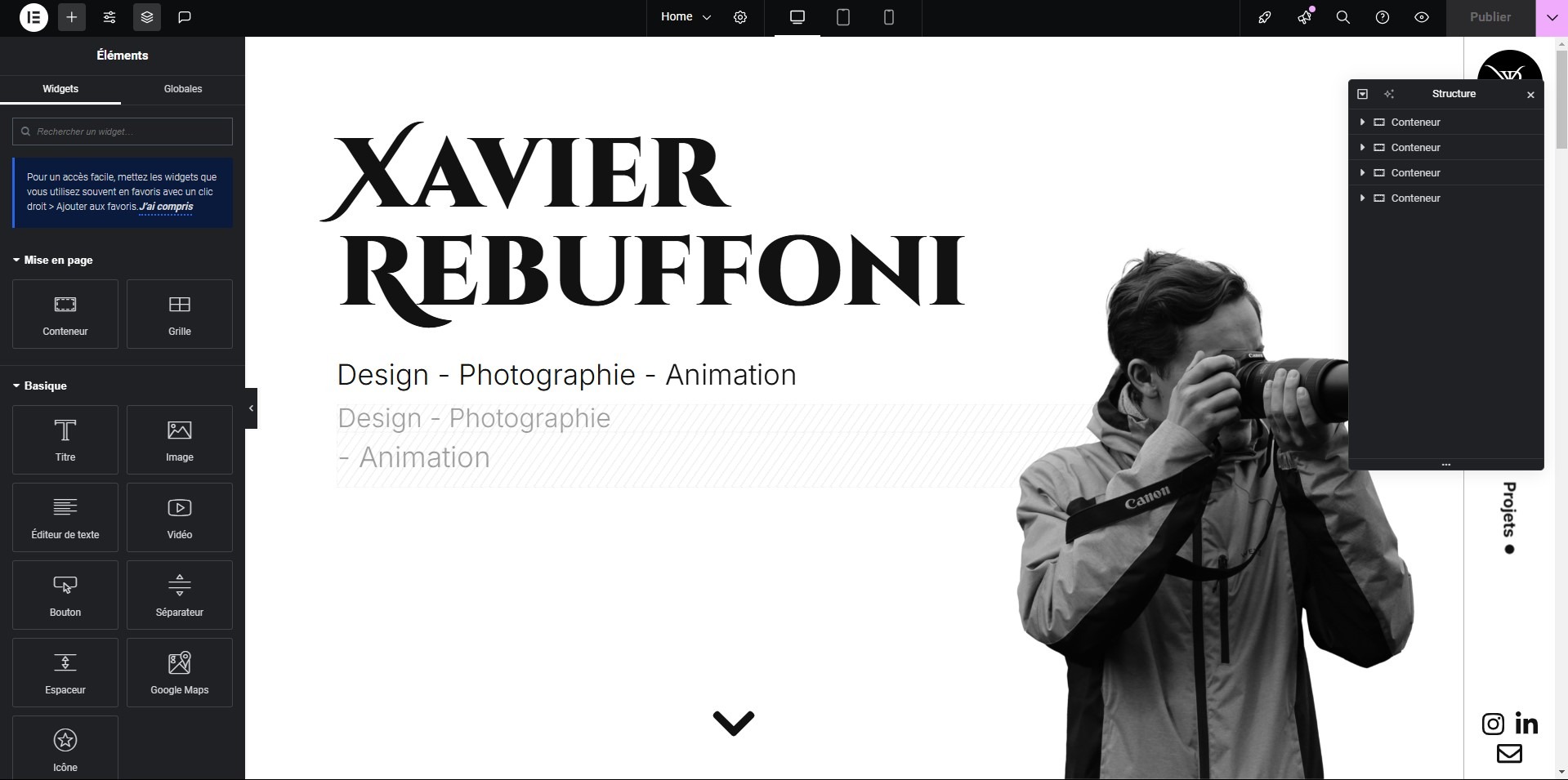
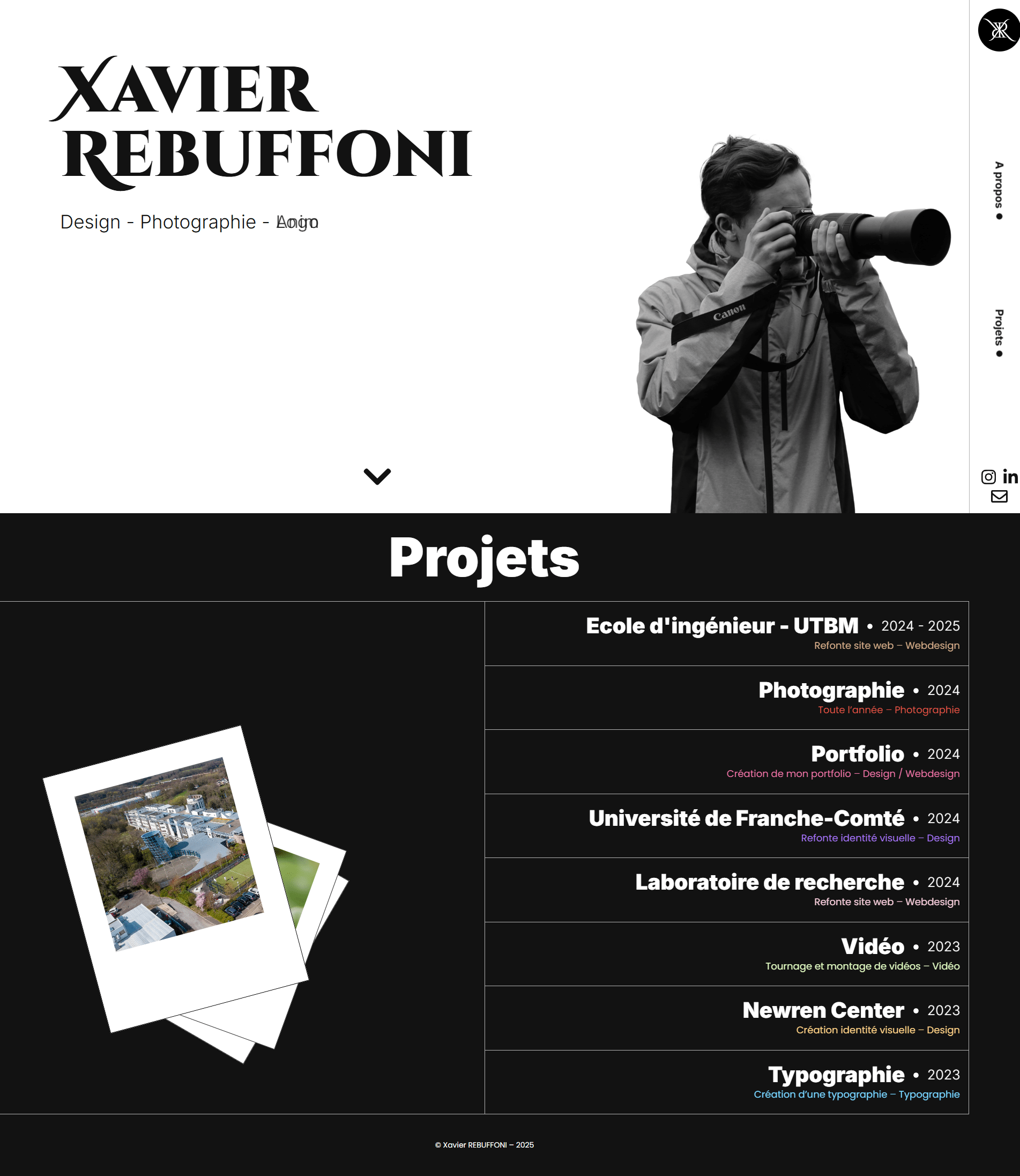
To maintain consistency with my logo, I designed my website with a black-and-white base and rectilinear graphic elements. To add a little contrast and dynamism, I incorpored a different bright color for each project page. This color is used for the interactive elements. I chose to display project photos in a Polaroid-style format to reflect my main hobby, photography.
My website was entirely created with the Elementor Pro plugin on WordPress. I chose to work with this plugin because it offers a number of automation options while still allowing me to customize the code. I also prioritized using a CMS (Content Management System) like WordPress rather than raw code to simplify site updates and the addition of new pages.
Beyond design, the biggest challenge I faced was writing the content. I had to find the right balance between writing too much text, which would have overloaded the pages, and not writing enough text, which would have made it difficult to understand the projects. To solve this challenge, I rewrote each text multiple times until I found the perfect balance. I also analyzed existing portfolios and asked my university teachers for advice.
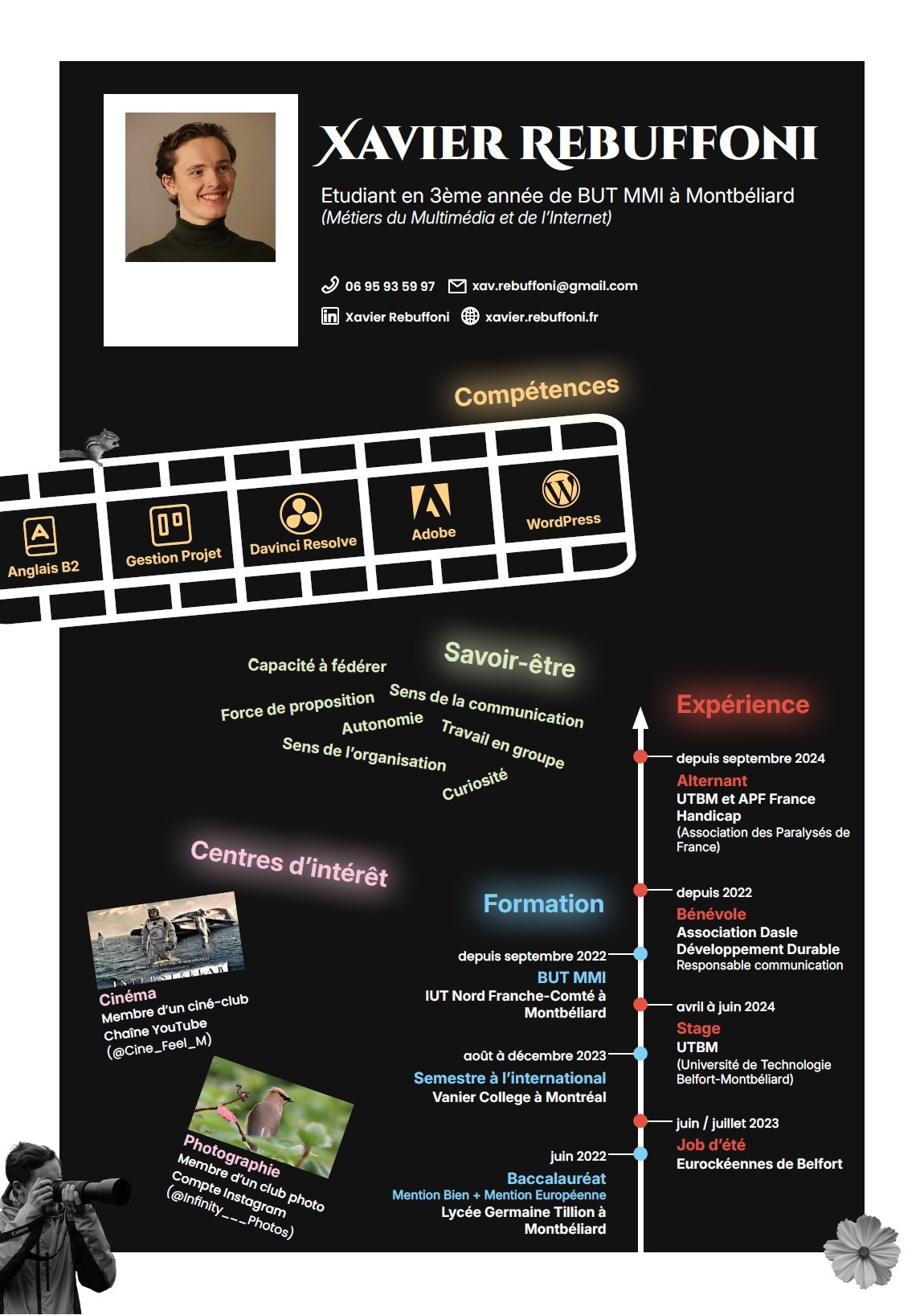
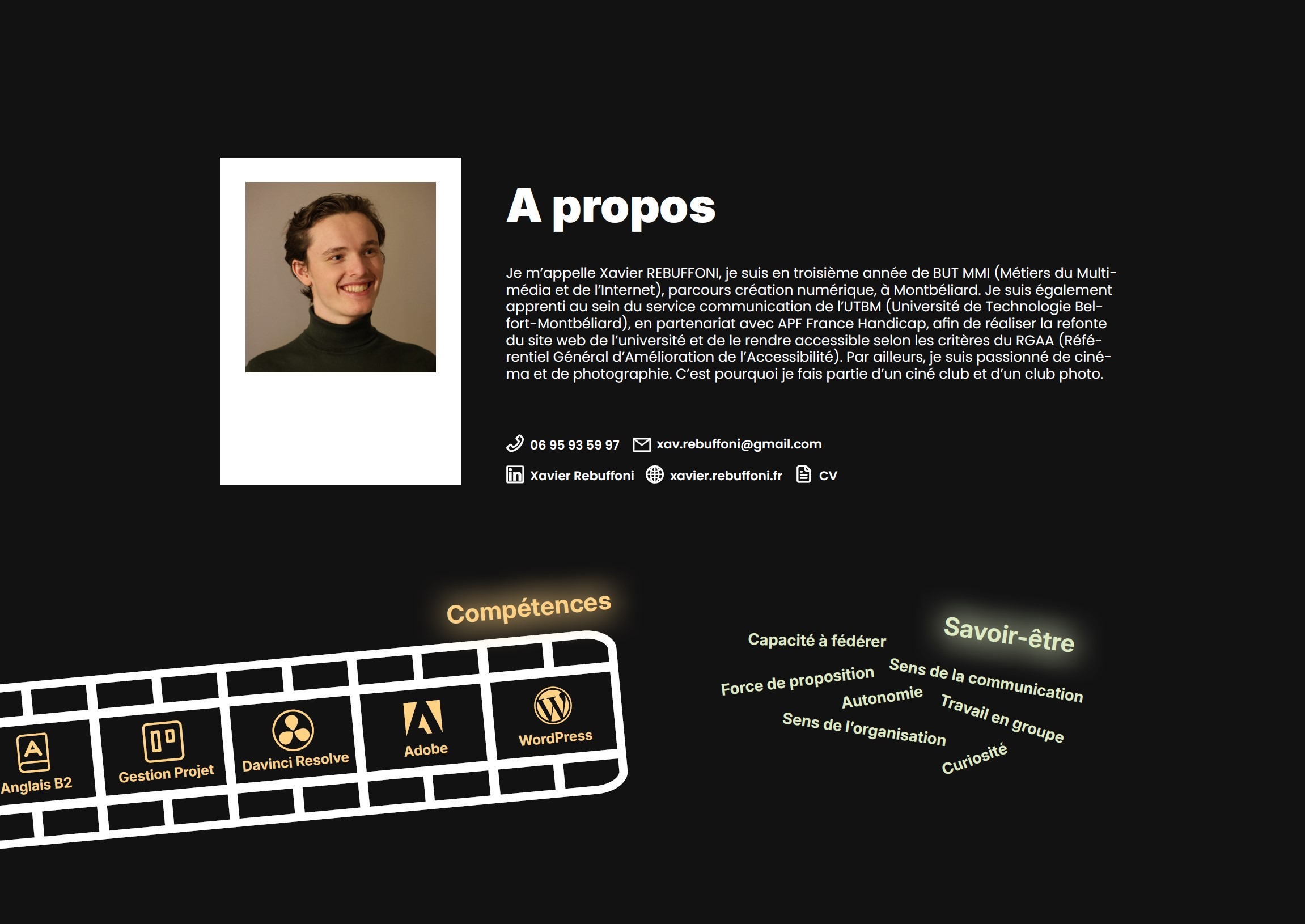
Once my visual identity was defined and in parallel with the integration of the site, I created my resume, maintaining the black-and-white theme and my photo in a Polaroid-style format. I also chose to display my skills as a film strip, symbolizing my passion for cinema. The section titles feature a drop shadow, reminiscent of LED signs at the cinema entrances.
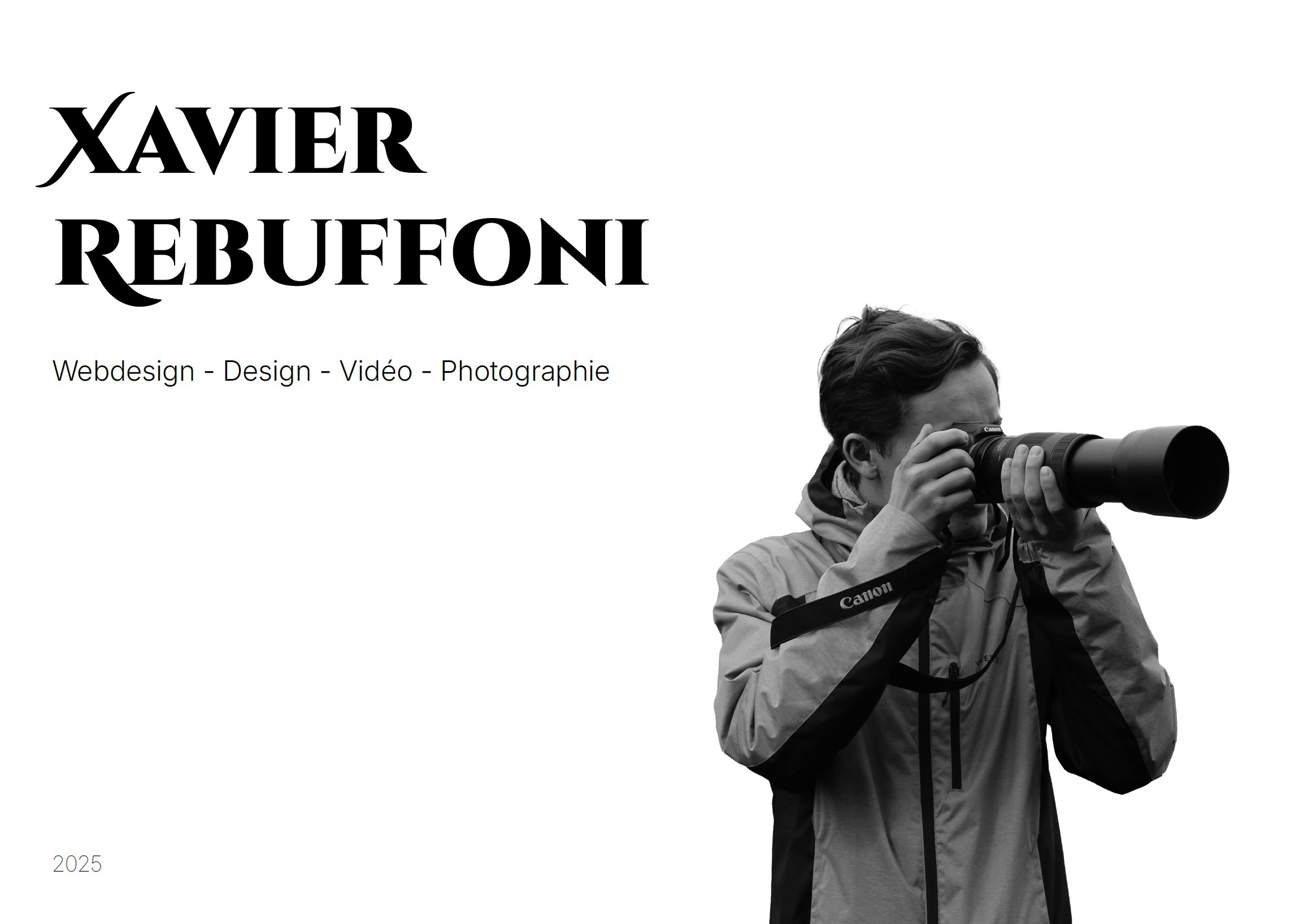
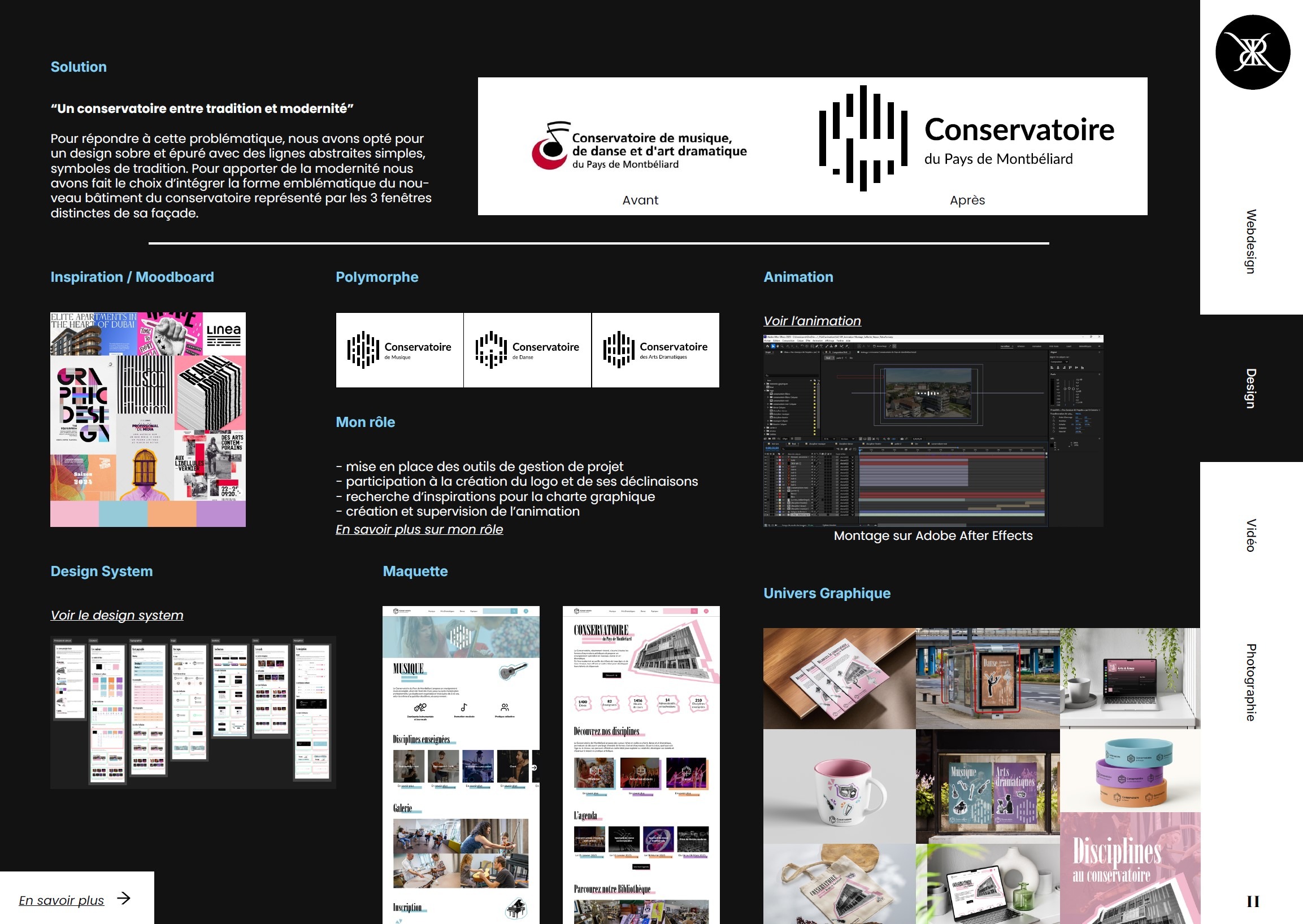
Once I had finished my portfolio, I turned it into a pdf book. I used the same presentation style as on my website to maintain consistency within my visual identity. For example, the first page of the book has the same design as the homepage, the side menu is repurposed for navigation between pages, and each project follows the same layout as on the website. I also incorporated elements from my resume into the “About” page. Finally, I chose to organize my projects by theme, presenting them with images only, and along with links for more information. This avoids overloading the book and makes it easier to read.
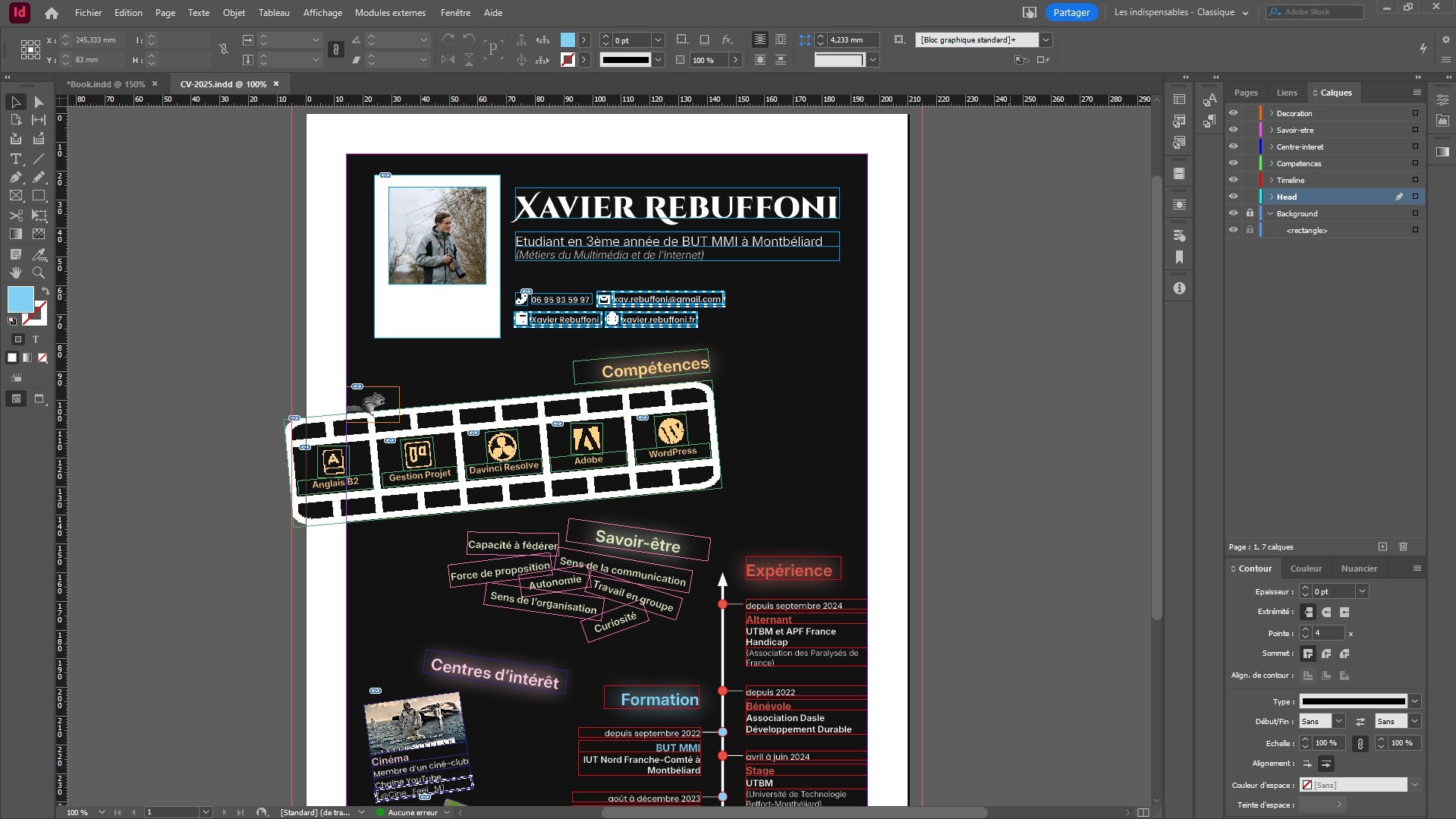
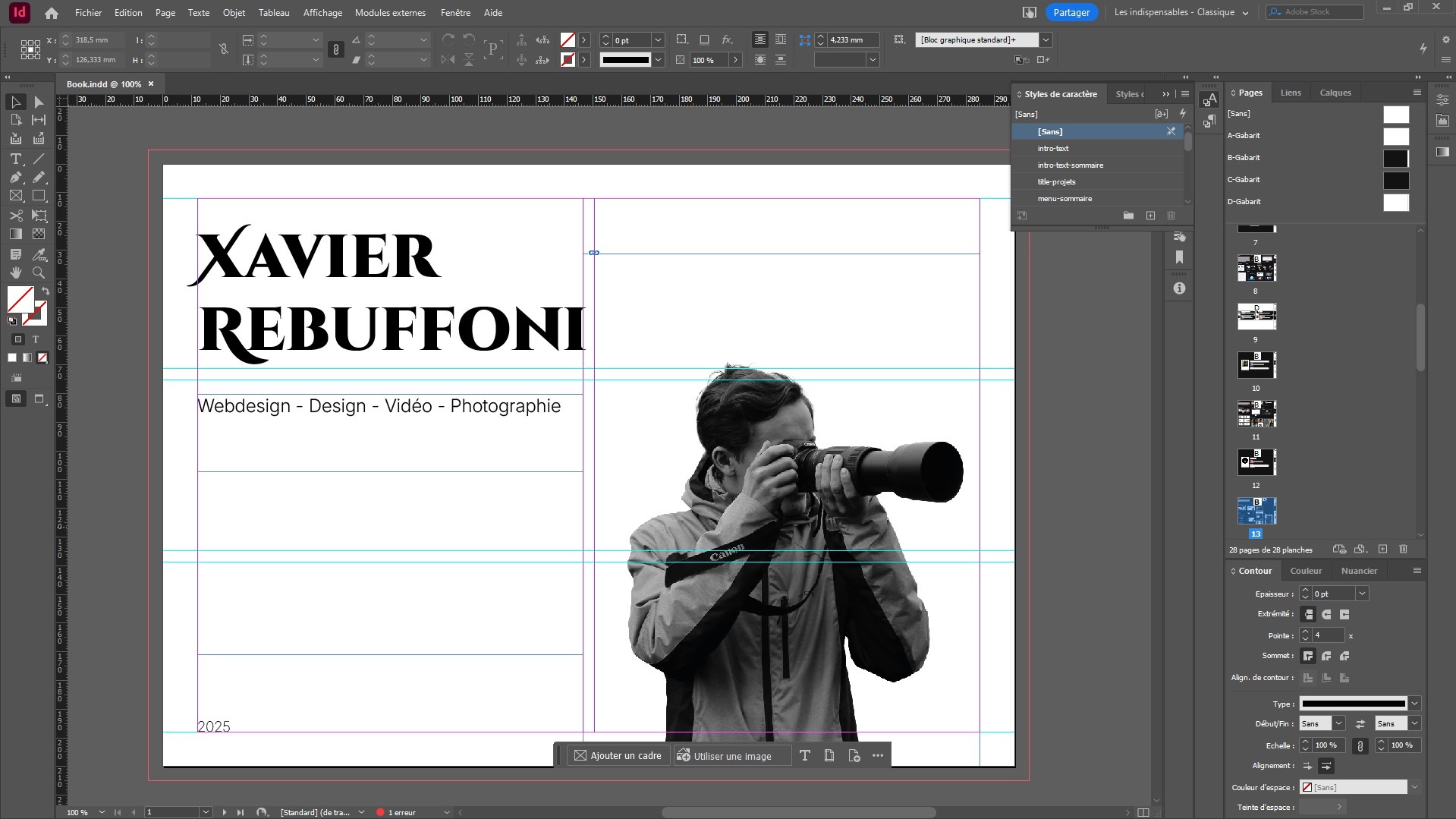
My book was built entirely with Adobe InDesign software. I used the main grid and text style tools to facilitate the layout.